
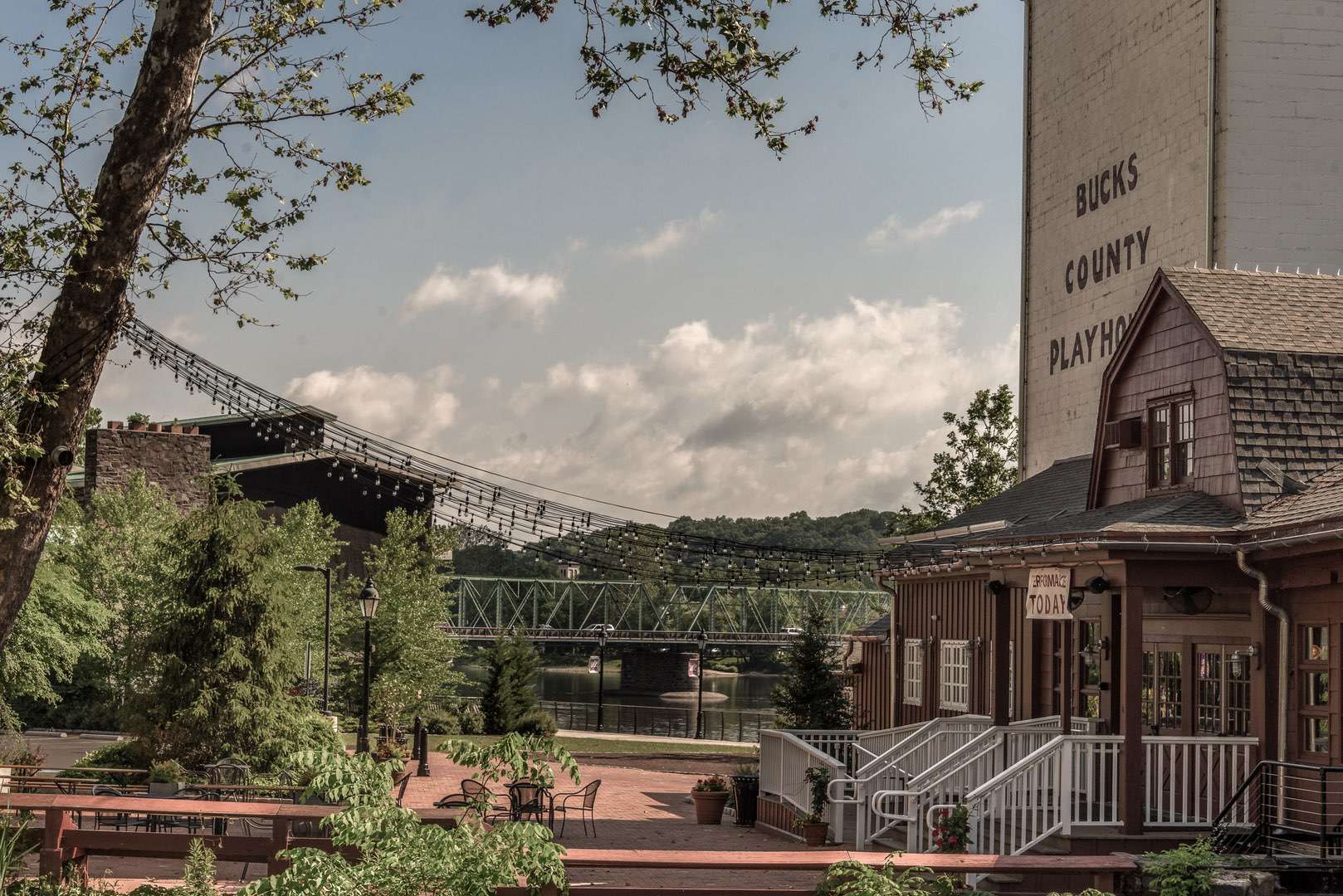
Art gallery in New Hope, Pennsylvania
Home  /  Art
Art in New Hope

The art town on the Delaware.

The Pennsylvania Impressionists settled here. The galleries stayed. The Playhouse opened in a 1790 grist mill. More than a century of art is still walking around six walkable blocks.

🎨
The arrival
1898 onward

The Pennsylvania Impressionists.

Around 1898, a Philadelphia painter named Edward Redfield bought a hillside property in Centre Bridge, four miles north of New Hope, and started painting the Delaware in winter. He worked outdoors in heavy snow, on big canvases, with his hands going numb. He won prizes. He brought friends.

By 1907 there was enough of a colony of painters working along the river that critics were writing about the New Hope school, also called the Pennsylvania Impressionists. They worked outdoors in all weather, on big canvases. Their style stayed away from the soft Parisian look of the French Impressionists. Theirs was harder, more atmospheric, more about a specific weather on a specific hillside on a specific day.

The colony was at its peak in the 1910s and 1920s, but the New Hope tradition of working artists living and painting along the Delaware never really stopped.

“The American Impressionists who worked along the Delaware found in this stretch of river a landscape worth painting fifty different ways.”
🦚
The names you should know
The painters

Who they were.

Edward Redfield (1869 to 1965) was the figurehead. Lived in Centre Bridge, painted snow scenes that hang at the Met and the Phillips Collection. Won every major prize an American painter could win in the early 20th century.

Daniel Garber (1880 to 1958) lived in Lumberville. Lyrical, decorative, more delicate than Redfield. His large mural A Wooded Watershed hangs at the Pennsylvania Academy of the Fine Arts.

William Lathrop (1859 to 1938) was older than the others and the artistic anchor of the colony. Built a studio at Phillips Mill in 1898, taught generations of younger painters there. The dean of the Bucks County art scene through the 1920s and 30s.

Fern Coppedge (1883 to 1951) was the most prominent woman of the group. Lived for years on Mechanic Street in New Hope. Her snow paintings are some of the most distinctive of the school: bright color, simplified shapes, deeply New Hope.

Others worth a mention: Robert Spencer (mill towns and tenements, painted in the borough), Walter Schofield, Charles Rosen, Walter Baum, John Folinsbee. Most are represented in the Michener Art Museum collection, ten miles down the road in Doylestown.

🏠
A stone mill, an annual show
1894 onward

Phillips Mill.

Phillips Mill is a stone hamlet on River Road three miles north of the borough, built around an 18th-century grist mill. Dr. George Marshall bought the property in 1894 and turned the second floor of the mill into a studio. William Lathrop and friends followed. By 1929 the artist community had organized itself into the Phillips Mill Community Association, which still exists, and started running an annual juried art show.

The Phillips Mill Annual Juried Art Show has now been held continuously since 1929. It runs every fall, in the original mill building, and is one of the longest-running juried art shows in the United States. The Phillips Mill Photographic Show and Sculpture Show run separately. Local and regional artists submit; the jury is rotating; getting in is a real distinction.

Visit the mill

The mill is at 2619 River Road, accessible by car or by walking the canal towpath three miles north from the New Hope visitor center. The mill is open to the public during the annual shows. phillipsmill.org

🏪
The collection
10 miles south

The Michener Art Museum.

The James A. Michener Art Museum in Doylestown holds the largest single collection of New Hope school paintings anywhere. The collection grew out of the personal art collection of Pulitzer-winning novelist James Michener, who lived in nearby Doylestown for most of his life and donated the foundation works. The museum opened in 1988 in a converted county jail building (the original walls and corner watch tower are still in the structure).

Beyond the Pennsylvania Impressionists, the Michener has rotating exhibitions of contemporary regional art, a permanent installation of works by Bucks County writers (including Pearl Buck and Oscar Hammerstein II), and a sculpture garden. About thirty minutes by car from New Hope. Worth a half-day if you care about the art history of the region.

Address: 138 South Pine Street, Doylestown, PA. michenerartmuseum.org

🎭
Theatre on the river
1939 onward

The Bucks County Playhouse.

The painters were here first; the theatre followed. In 1939, a group of local theatre people raised money to convert Benjamin Parry's 1790 grist mill on the Delaware into a 480-seat summer theatre. The Bucks County Playhouse opened on July 1, 1939.

By the late 1940s the Playhouse was hosting Helen Hayes, Walter Matthau, Grace Kelly, Robert Redford, Liza Minnelli, Bernadette Peters, and dozens of others. Barefoot in the Park, The Owl and the Pussycat, and Same Time, Next Year all premiered on this stage.

The theatre had hard years and briefly closed in 2010. A nonprofit board and a major capital campaign rescued it. It reopened in 2012 with restored seating, modern wiring, and a fresh marquee. It is again a working professional regional theatre, and many shows still travel from this stage to Broadway.

✨
Living scene
Today

The scene today.

New Hope is still a working art town. Painters, photographers, sculptors, and ceramicists live and work in the borough and the surrounding township. Most galleries are owner-operated and represent both Bucks County artists and visitors from further afield.

The New Hope Arts non-profit, on Mechanic Street, runs a continuous calendar of group shows, sculpture exhibitions, and special events. It’s the closest thing the borough has to a central arts hub. For gallery openings and current shows, check each gallery’s own site or Instagram.

Beyond the visual arts, you have the Playhouse, John & Peter's (live music most nights since 1972), and Havana (live music dinner spot).

Where to see art now

Active galleries in the borough.

A short list of working galleries and arts organizations in and around New Hope. All current chamber members. Hours vary by gallery; most run extended hours on weekends.

New Hope Arts
2 Stockton Avenue

The borough non-profit. Continuous calendar of group shows, sculpture exhibitions, the annual outdoor sculpture installation, and openings on most Friday evenings. The center of the working-arts community.

The A Frame at New Hope Arts
Inside New Hope Arts, 2 Stockton Avenue

The smaller project space inside New Hope Arts that hosts solo and small-group shows of emerging Bucks County artists. Worth a stop on its own when you visit the main galleries.

Arete Gallery
New Hope

Contemporary fine-art gallery showing painting, sculpture, and mixed media from regional and nationally known artists. Rotating exhibitions, member openings.

Gallery Piquel
35 & 39 N Main St

Premier New Hope/Lambertville fine art gallery since 2007. Original, eclectic work from 70+ artists, most local to the Delaware Rivertowns or Tri-State region. Art consultation for collectors and designers. (215) 862-3523.

Bucks County Gallery of Fine Art
77 W. Bridge Street

Specializes in Pennsylvania Impressionist painters: Redfield, Garber, Lathrop, Folinsbee, Schofield, Coppedge. The single best place in the borough to see (and buy) the historic New Hope school.

Golden Door Gallery
52 S. Main Street

Family-run gallery on South Main showing contemporary regional artists across painting, prints, and sculpture. Rotating shows roughly every six weeks.

Silverman Gallery
4920 York Road, Holicong

Six miles north on Route 202. Strong contemporary American collection and a focus on Pennsylvania Impressionists in their secondary market sales.

James A. Michener Art Museum
138 S. Pine Street, Doylestown

Not in the borough, but the destination. The largest collection of New Hope school works anywhere. Rotating contemporary exhibitions. Worth the half-hour drive.

More galleries open and rotate as the scene evolves. If you run a gallery in the borough or surrounding township and want to be listed here, email newhopechamber@gmail.com.

Sources and image credits: Photos on this page are from the Greater New Hope Chamber of Commerce and Visit New Hope archives, used with permission. Sources for the historical narrative include the James A. Michener Art Museum, the Phillips Mill Community Association, the Bucks County Playhouse historical records, and gallery owner interviews. If you spot an error, email newhopechamber@gmail.com and we will fix it.